
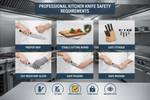
Professional Kitchen Knives in Australia: Safety Requirements, Knife Types and Food Regulations
, by Outback Edge, 13 min reading time
, by Outback Edge, 13 min reading time
A complete guide to professional kitchen knives in Australia. Covers the main knife types used in commercial kitchens, hygiene and workplace safety requirements, food safety regulations by state and territory, and best practice for knife selection and maintenance.
Professional kitchens in Australia rely on knives every day for speed, consistency, presentation and efficiency. From breaking down meat and preparing vegetables to slicing bread and plating fine garnish, the right knife makes kitchen work faster, cleaner and safer.
But in a commercial kitchen, choosing a knife is not only about performance. It is also about hygiene, workplace safety and legal compliance. In Australia, professional kitchen knives are part of the broader food safety system. They must be suitable for food preparation, easy to clean, maintained in good condition, and used in a way that helps prevent contamination and injury.
This guide explains the main types of knives used in professional kitchens, the key health and safety requirements in Australian commercial kitchens, and the food safety regulations that apply in each state and territory.
In a busy commercial kitchen, every knife should have a purpose. Using the right knife for the task improves:
A poor-quality knife, a blunt knife, or the wrong knife for the job can slow down service, damage ingredients, increase the chance of slips, and make cleaning and food safety harder to manage.
For this reason, professional kitchens in Australia should treat knives as both essential prep tools and regulated food-contact equipment.
The chef's knife is the workhorse of most commercial kitchens. It is used for chopping, slicing, dicing and mincing a wide range of ingredients including vegetables, herbs, proteins and fruit. In many kitchens, this is the single most-used knife on the line.
A santoku is a versatile all-round kitchen knife commonly used for slicing, fine vegetable work and general prep. Its flatter edge and compact profile make it popular with many chefs who prefer a more controlled cutting style.
A paring knife is designed for smaller, more delicate jobs such as peeling, trimming, coring and garnish preparation. It is an essential supporting knife in most professional kitchens.
A utility knife fills the gap between a chef's knife and a paring knife. It is useful for medium-sized produce, smaller slicing tasks and detail work where a larger blade feels cumbersome.
With its serrated edge, the bread knife is ideal for cutting crusty loaves, soft rolls, cakes and produce with delicate interiors and firmer skins. It allows clean cuts without crushing the item.
A boning knife is used to trim meat and work around joints and bones. Flexible models are often preferred for poultry and fish, while stiffer blades are commonly used for beef, lamb and pork.
Fillet knives are designed for fine fish work, delicate trimming and precise skinning. In seafood-focused kitchens, they are a key specialist tool.
These longer knives are designed to produce clean, even slices of cooked meats such as roast beef, ham, brisket and turkey.
A nakiri is a specialist vegetable knife designed for repetitive board work, especially where clean, straight cuts are needed.
A cleaver may be used in some commercial kitchens for heavier prep work, depending on the menu and kitchen style. Some are used for dense vegetables, while heavier-duty models may be used for butchery tasks where appropriate.
Browse our full range of Kitchen Knives to find the right blade for your commercial kitchen.
In professional kitchens, knife safety is not just common sense. It forms part of both food safety compliance and workplace safety obligations.
Because knives come into direct contact with food, they must be kept clean and, where required, sanitised. A knife with food residue on the blade, bolster or handle can spread bacteria and contaminate other ingredients.
In practical terms, commercial kitchen knives should be:
This is especially important in kitchens handling raw poultry, seafood, red meat and ready-to-eat foods.
A professional kitchen knife should be well maintained and fit for purpose. Chipped edges, loose handles, cracked scales, corrosion and excessive wear can create safety risks and hygiene issues.
Damaged knives should be removed from service and either repaired professionally or replaced.
Cross-contamination is one of the biggest food safety risks in any commercial kitchen. Knives can transfer bacteria, allergens and residues from one task to another if they are not properly managed.
Best practice includes:
Food handlers in Australian commercial kitchens are expected to have the knowledge and skills needed to do their work safely. This includes knowing how to safely use, clean, store and maintain kitchen knives.
Knife-related training should cover:
In addition to food safety law, employers in Australia must manage workplace risks. In kitchens, knives are one of the most common causes of laceration injuries, especially during busy service periods, cleaning, dishwashing and food prep.
To reduce risks, commercial kitchens should have:
A blunt knife often requires more pressure to cut, which can increase the chance of slipping. In commercial kitchens, routine sharpening is part of both performance and safety.
A proper knife maintenance system should include:
For practical guidance on keeping your knives in top condition, read our guide: Maintaining Knives in Australia: How to Clean, Protect, and Keep an Edge. For sharpening technique, see: How to Sharpen a Knife Like a Pro.
Australia uses a national food safety framework, but each state and territory has its own food legislation and enforcement bodies.
At a national level, the core rules for professional kitchens come from the Australia New Zealand Food Standards Code, particularly:
Together, these standards require food businesses to use suitable equipment, keep food safe from contamination, clean and sanitise food-contact items properly, and ensure food handlers have the right skills and supervision.
Important: Food laws in Australia can change, and local council requirements may also apply depending on your business type, premises and location. Always check the current legislation and guidance issued by your state or territory regulator before relying on this information.
In Queensland, professional kitchens operate under the Food Act 2006 (Qld) alongside the national Food Standards Code. Queensland food businesses may also be subject to licensing, local government oversight and food safety supervisor requirements depending on the business type.
In New South Wales, the key legislation is the Food Act 2003 (NSW), supported by the Food Regulation 2025 and the national Food Standards Code. Enforcement is shared between local councils and the NSW Food Authority, depending on the business type.
In Victoria, food businesses operate under the Food Act 1984 (Vic) together with the Food Standards Code. Victoria also uses a food premises classification system and has food safety supervisor requirements for many businesses. Workplace safety falls under the Occupational Health and Safety Act 2004 (Vic).
In South Australia, the key law is the Food Act 2001 (SA), supported by the national Food Standards Code. SA Health oversees food business guidance and food safety compliance, including the newer food safety management tool requirements.
In Western Australia, professional kitchens must comply with the Food Act 2008 (WA), Food Regulations 2009 and the Australia New Zealand Food Standards Code. For workplace safety, WA also operates under the Work Health and Safety Act 2020 (WA).
In Tasmania, the governing legislation is the Food Act 2003 (Tas) along with the national Food Standards Code. Commercial kitchens must ensure food-contact equipment, including knives, is suitable, sanitary and maintained in proper condition.
In the ACT, food businesses generally operate under the Food Act 2001 (ACT), the Food Regulation 2002 and the Food Standards Code. Registration, inspections and food safety requirements apply to many commercial food businesses.
In the Northern Territory, food businesses must comply with the Food Act 2004 (NT) alongside the Food Standards Code. Food businesses are required to be registered, and environmental health officers oversee compliance.
To keep a professional kitchen safe, compliant and efficient, best practice usually includes the following:
A well-equipped commercial kitchen does not necessarily need dozens of knives. In most cases, a practical working set will include:
Specialist kitchens may also add fillet knives, nakiri knives, cleavers or other task-specific blades depending on the menu.
When choosing professional kitchen knives, focus on:
You can explore our range of Kitchen Knives to find quality knives suited to professional prep, hospitality use and serious home cooks.
Cheap knives can seem attractive when fitting out a kitchen, but in high-use commercial environments they often cost more in the long run. Lower-quality knives may dull faster, chip more easily, feel uncomfortable in hand and require more frequent replacement.
A quality professional kitchen knife can improve productivity, reduce fatigue and support better consistency in service.
For chefs and kitchen teams looking to maintain performance, keeping your edge tools in good order is essential. Read our guide on Maintaining Knives in Australia and How to Sharpen a Knife Like a Pro for practical advice.
Professional kitchen knives are one of the most important tools in any Australian commercial kitchen, but they also sit at the intersection of food safety, staff training and workplace health and safety.
The right knife should be fit for purpose, easy to maintain, safe to use and appropriate for the food being prepared. When combined with good hygiene, regular sharpening, proper storage and clear kitchen procedures, quality knives help create a safer and more efficient workplace.
Whether you are fitting out a restaurant, café, catering business or hospitality venue, investing in the right knives is not just about cutting performance. It is about building a professional kitchen that works safely, cleanly and consistently.
Browse the Outback Edge range of Kitchen Knives to build a safer, better-equipped kitchen.

THE SALE OF KNIVES AND OTHER CONTROLLED ITEMS TO MINORS IS PROHIBITED. 18 + only
Penalties apply.
Acceptable evidence of age may be required prior to finalising sale.
You are not old enough to visit the shop yet.