
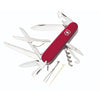
Victorinox Swiss Army Knife Buying Guide: Which Model Is Right for You?
, by Outback Edge, 12 min reading time
, by Outback Edge, 12 min reading time
A practical guide to choosing a Victorinox Swiss Army Knife in Australia — the heritage behind the brand, the size classes, every key model compared, and which suits everyday carry, camping, trade work or gifting.
Victorinox has been making the Swiss Army Knife since 1897, and the formula has barely changed because it has never needed to: a compact, superbly made tool that lives in your pocket and earns its place every day. The catch for a buyer is that there are dozens of models, and the differences between them aren't obvious from a photo. This guide cuts through the range — the story behind the brand, how the sizes differ, what each layer of tools actually adds, and which model suits the way you'll use it.
There's no single “best” Swiss Army Knife. The right one is the smallest, simplest knife that carries the tools you'll genuinely use. A tradesperson wants different things from a keyring carrier, and a camper wants different things again. Work out your use first, then match the model.
It helps to understand what you're actually buying. Victorinox is not a brand that licensed an old name — it's the company that invented the thing.
The business was founded in 1884 when Karl Elsener opened a cutler's workshop in Ibach, in the Swiss canton of Schwyz. In 1897 he patented the “Original Swiss Officer's and Sports Knife” — the knife the world now knows as the Swiss Army Knife. The company name came later, in stages: Elsener chose the name Victoria in memory of his mother, and when stainless steel (“inox” in French) became central to the blades in the 1920s, the two words were combined into Victorinox. The Cross & Shield emblem he registered is now a protected trademark in more than 120 countries.
More than 140 years on, the knives are still made at the same site in Ibach, Switzerland, and the company is still family-run and family-owned through the Victorinox Foundation. Along the way the design earned a place in the permanent collection at New York's Museum of Modern Art, NASA ordered them for its crews, and in 2017 the 500-millionth Original Swiss Army Knife came off the line. When you buy a Victorinox, you're buying the genuine article with that whole history behind it — which is exactly why it holds its value and its reputation.
The company sums up what it stands for in three words — best prepared, smart, masterful — and the design philosophy is just as plain: form follows function. Every tool on the knife is there to do a job, and nothing is on there for show. That's the lens to buy through.
Victorinox tells its own story best — here's their brand film:
Almost every Swiss Army Knife falls into one of a few size classes. Get this right and the model choice becomes much simpler.
58mm — the keyring class (Classic SD). Small enough to live on a keyring or in a coin pocket and be forgotten until you need it. A small blade, spring scissors, nail file and screwdriver tip cover the little daily jobs — opening packaging, trimming a loose thread, tightening a glasses screw. Not a work knife, but the one you'll always have on you.
91mm — the classic class (Spartan, Camper, Climber, Huntsman, SwissChamp). This is the size most people picture when they think “Swiss Army Knife”. A full-size main blade, and room for layer upon layer of tools depending on the model. The everyday-carry sweet spot for most users.
Alox and heavy-duty (Pioneer X, Evoke, SwissTool). Metal-scaled Alox models trade the plastic layers for a slimmer, tougher build aimed at serious EDC. The SwissTool line steps into full plier-based multi-tool territory for trade and workshop use.
A quick word on what these knives are made of, because it's part of what you're paying for. The blades and tools are hardenable martensitic stainless steel — Victorinox has sourced its steel from trusted European mills for the best part of a century, and hardens it for a blade that takes and holds a keen edge. Since 1931 the hardening has been done in a controlled electric process, which is why one red Spartan performs like every other. The classic red and coloured scales are a durable synthetic; the Alox models use anodised aluminium (a material Victorinox has used since the first Pioneer in 1957) for a slimmer, grippier, more hard-wearing body.
The Victorinox Classic SD is the most carried Swiss Army Knife in the world, and for good reason — it does the small jobs that come up every single day and disappears the rest of the time. Blade, scissors, nail file with a flat screwdriver tip, tweezers and a toothpick, all in something lighter than a car key.
It's also the easy gift and the easy first Swiss Army Knife. The range runs from the understated Style Icon through colour editions like Mango Tango and Cherry Blossom. If you only ever carry one Victorinox, this is the one that goes everywhere.
This is where most buyers land. All four models below share the same 91mm frame and the same main blade — the difference is which tools sit on the layers. Work up the list until you hit the tools you'll use, then stop. In keeping with Victorinox's own “function first” thinking, there's no value paying for layers you'll never open.
Large and small blades, can opener, bottle opener with screwdriver, reamer, corkscrew, tweezers and toothpick. Everything most people need from a pocket knife and nothing they don't. If you're not sure where to start in the 91mm range, start here.
Same base as the Spartan with a genuinely useful wood saw added. If you spend time outdoors and cut kindling, notch tent pegs or trim branches, the saw earns its keep.
The Spartan layout plus a set of spring scissors instead of the saw. For everyday carry, scissors are one of the most-used tools on any Swiss Army Knife, which makes the Climber a favourite for non-outdoor users. Available in red, black and white.
The most popular full-size model because it combines the Climber's scissors with the Camper's wood saw. One knife that covers both everyday and outdoor jobs. If you want a single do-everything 91mm knife, this is usually it — offered in red, black and white.
More than 30 functions layered into the same 91mm frame: pliers, magnifying glass, chisel, fish scaler, multiple screwdrivers and more, on top of everything the Huntsman carries. It's a genuine feat of that “maximum functionality in a compact form” design thinking — thick in the hand and unapologetically maximal. Buy it if you genuinely want the complete kit or you love the object itself — not if you'll only ever use the blade and scissors. Available in red, black and blue translucent.
If you want something slimmer and tougher than the plastic-scaled classics, the Alox line uses ribbed anodised aluminium scales for a lower profile and a more premium feel in the pocket. Alox has been part of the Victorinox range since 1957, and it's earned a following for its grip and durability.
The Pioneer X Alox is the standout everyday carry: a large blade, scissors, can and bottle openers with screwdrivers, and a reamer, all in a flat, durable Alox body. It's the Swiss Army Knife for someone who wants the classic tool set in a grown-up, hard-wearing package.
The Evoke Alox moves toward a modern folding knife — a larger locking blade with one-hand opening and a pocket clip. It's a more contemporary design (the Evoke line has been recognised with a Red Dot Design Award) for buyers who want Victorinox build quality in a modern EDC format rather than the traditional layout.
When the job needs pliers, wire cutters and full-size drivers, the pocket-knife layers aren't enough — this is where the SwissTool line comes in. These are all-steel, plier-based multi-tools built for trade, workshop and serious outdoor use, where every tool is accessible from the outside and locks in place.
The SwissTool Spirit X is the more refined, ergonomic option with smoothly rounded handles and a leather pouch — a comfortable daily carry for tradespeople. If you're choosing between a Swiss Army Knife and a SwissTool, the question is simple: pocket knife tasks and light EDC point to the 91mm classics; pliers, wire and heavier fastening work point to a SwissTool. Many people end up with one of each. For the full plier-based range, browse the Victorinox collection.
Everyday carry (city, office, general use): Climber or Huntsman for the scissors, or the Classic SD if you want the lightest possible keyring option. Step up to the Pioneer X Alox for a tougher, slimmer build.
Camping, hunting and the outdoors: Huntsman or Camper for the wood saw. Pair it with a way to keep the edge keen — see our knife sharpening guide.
Trades and workshop: a SwissTool for the pliers and full-size drivers, with a Classic SD on the keyring for the small jobs.
A gift: the Classic SD in a colour edition is a reliable gift; the Huntsman or a Pioneer X Alox suits a more significant present. The Huntsman EDC bundle pairs the knife with an Australian-made mini strop so the edge stays sharp — a complete, ready-to-give kit.
A Victorinox is built to last — these are knives that get handed down, and the company backs them with a guarantee against defects in material and workmanship. Treat it right and it'll outlast most things you own: keep the pivots clean and put a drop of oil on the joints occasionally. The hardened stainless blades take a keen edge and are easy to maintain — a few passes on a strop or a fine sharpener brings them back to sharp. Our guide on how to use a leather strop covers the quickest way to keep a small blade shaving-sharp.
Every model in this guide is available from the Victorinox collection — stocked in Yandina, QLD and dispatched across Australia. Not sure which one suits you? Give us a call on 0489 229 879 and we'll talk it through.
The Huntsman is the most popular full-size model because it combines scissors and a wood saw, covering both everyday and outdoor jobs in one 91mm knife.
They share the same 91mm frame and main blade. The Spartan is the base model; the Climber adds scissors; the Huntsman adds both scissors and a wood saw.
They're made in Ibach, Switzerland, where the company was founded in 1884 — and Victorinox is still a family-owned Swiss business today.
A Swiss Army Knife is a tool, and most models are legal to own. Carry laws vary by state and depend on having a lawful reason to carry — see our guide to knife laws in Australia for the detail.
Swiss Army Knives are pocket knives with layered tools for light everyday tasks. SwissTools are all-steel, plier-based multi-tools built for heavier trade and workshop work.
The hardened stainless blades take a keen edge easily. A few passes on a strop or a fine pull-through sharpener keeps them sharp; oil the pivots occasionally to keep the tools working smoothly.

THE SALE OF KNIVES AND OTHER CONTROLLED ITEMS TO MINORS IS PROHIBITED. 18 + only
Penalties apply.
Acceptable evidence of age may be required prior to finalising sale.
You are not old enough to visit the shop yet.